5 Top 2027 Bridal Trends from New York Bridal Fashion Week from a Bridal Fashion Stylist
A deep dive into the ‘Modern Renaissance’ at NYBFW, where traditional fabrics meet modern silhouettes for the 2027 bridal season.
By Logan Baker, Founder of Love, Logan Wedding Content Creation & Bridal Fashion Stylist
10 min read | Published April 15, 2026
1. Lace Reintroduced: The Modern Lace Wedding Dress Trend
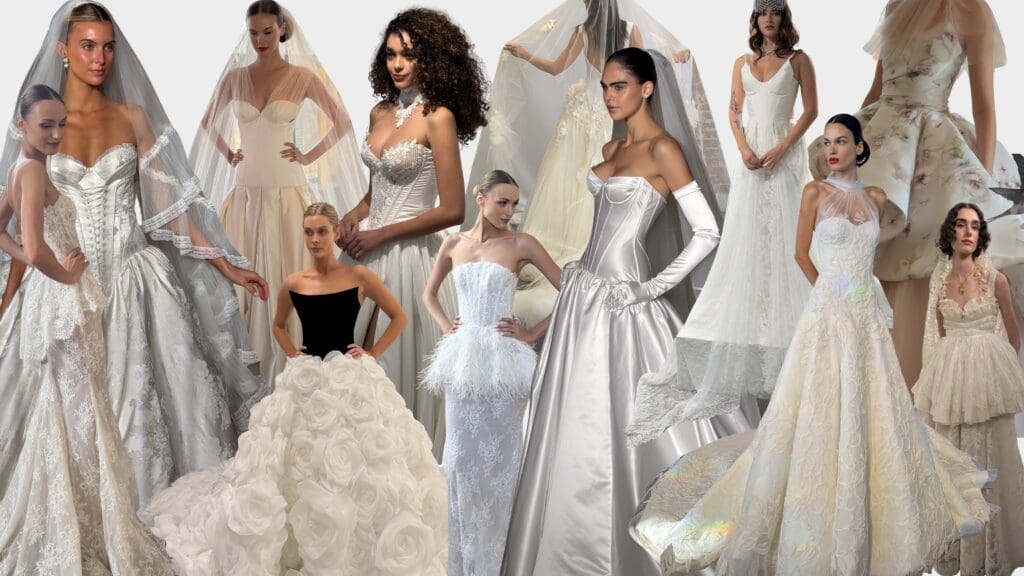
Lace was everywhere at New York Bridal Fashion Week, but not in the way it’s traditionally been used in bridal. It didn’t feel predictable or overly delicate; instead, it signaled a lace renaissance. It felt intentional. Considered. Almost rediscovered.
Designers at NYBFW Spring 2027 leaned into lace as a medium rather than a detail. It showed up layered into transformational overskirts that changed the silhouette entirely, draped into mantilla-style veils that framed the face with a cinematic softness, and stretched across gowns in sheer sheet lace that created a barely-there, second-skin effect
There was a noticeable range in how it was executed. Some gowns featured intricate appliqué and 3D floral embroidery that added depth and dimension, while others embraced more traditional patterns, reworking them into modern lace wedding dresses that felt clean rather than expected. Even Alençon lace and French Chantilly lace, which often read as classic, felt refreshed this season, styled with a sense of restraint and intention that gave them new life
What stood out most was how versatile lace became for the 2027 bride. In some moments, it felt heirloom-inspired, like something with history woven into it. In others, it leaned editorial, layered over sculpted silhouettes—like the popular basque waist—or paired with more minimal foundations to create contrast.
It wasn’t just about lace making a return; it was about how thoughtfully it was used. Less as a signal of “bridal,” and more as a tool for textural storytelling, movement, and modern romance.
2.The Return of the Peplum: A 2027 Bridal Trend
The peplum wedding dress made a quiet but undeniable return this season at New York Bridal Fashion Week, reimagined in a way that felt far removed from its more familiar, everyday associations. Instead of reading as a vintage trend from the past, the peplum silhouette felt softened, romantic, and much more refined for the 2027 bride.
Designers incorporated peplums across a range of bridal silhouettes, from fitted mermaid gowns to classic A-line shapes. A standout execution of this trend came from Tom Sébastien, who showcased beautiful, sophisticated peplums that moved beyond basic structure. One particularly breathtaking Tom Sébastien gown featured a lace and feather peplum, proving that this detail can be as much about high-fashion texture as it is about shape.
In some runway looks, the peplum was seamlessly built into the structure of the dress itself. In others, it appeared through detachable overskirts, adding movement and dimension without overwhelming the gown underneath. There was a lightness to this waist-defining trend that made all the difference. Where bridal peplums can sometimes feel rigid, this season they felt fluid and effortless.
Nothing about these modern peplum gowns was exaggerated; they were controlled, thoughtful, and quietly expressive. By blending elements like intricate lace and delicate feathers, designers like Tom Sébastien ensured this detail came across as one of the most sophisticated bridal shifts on the runway. It was less about structure for the sake of it, and more about creating balance, movement, and a modern romance that feels entirely current.
3. A Gothic Renaissance, Reimagined
There was an undercurrent throughout New York Bridal Fashion Week that felt darker, more expressive, and quietly rebellious. Not in a way that rejected bridal style, but in a way that redefined it for the 2027 wedding season.
Elements of gothic romance, Renaissance-inspired wedding dresses, and modern drapery wove together into an undone etherealness that felt deeply intentional. These Spring/Summer 2027 gowns moved differently; the styling was more directional and less polished, which was exactly the point. We saw this beautifully executed by Katherine Tash, whose signature draping and sculptural silhouettes felt both cinematic and slightly rebellious in their effortless sophistication.
Odylyne the Ceremony captured this shift through a more maximalist lens. Their presentation leaned fully into this moody aesthetic, layering statement bridal accessories in a way that felt like styling a character rather than a traditional bride. We saw oversized bridal hats for added drama, sparkling eye coverings that felt mysterious, and maximalist bridal jewelry that became central to the look.
From thick necklaces and layered brooches to bridal chokers, each element added weight. This wasn’t minimalist bridal—it was curated. There was something almost “anti-bride” about it, giving permission to step outside of expectation and prioritize personal style over tradition. This shift wasn’t about abandoning romance; it was about redefining it for the individual bride. It’s moodier, more layered, and perfectly suited for a non-traditional wedding aesthetic.
4.The Soft Floral Aesthetic: Corded Lace & Organic Appliqué
Floral wedding dresses continued to hold their place this season at NYBFW, but they felt quieter, more dimensional, and far more intentional. Instead of reading as surface-level decoration, these botanical details were built into the fabric of the gown itself.
Corded floral laces stood out immediately—a look mastered by Nardos and Dany Tabet this season—adding a subtle structure that gave the 2027 bridal designs depth without taking away from their softness. There was a delicacy to the textured lace, but also a presence; you could feel the detail before you even fully saw it. Floral appliqués followed a similar direction, layered in a way that felt organic rather than placed. It was as if the flowers had settled onto the gown naturally, creating movement and 3D texture with every step.
What made this shift feel especially fresh was how often these intricate laces were paired with ethereal tulle. Soft, weightless layers of tulle bridal skirts balanced the detail of the appliqué, allowing the overall look to breathe. This created a perfect contrast between structured lace and airy volume. The result felt romantic, but not overly sweet—a refined bridal aesthetic defined by restraint and lightness. It’s a softer direction for the 2027 bride, one that favors quiet, sophisticated detail over bold statements.
5. The Rise of the Bridal Cape: Drama and Versatility
Bridal capes made their presence known at New York Bridal Fashion Week in a way that felt both Bridal capes emerged as a standout trend at NYBFW, appearing in a way that felt both dramatic and incredibly practical. They weren’t just an accessory added on at the end; they were designed as a core part of the Spring/Summer 2027 bridal looks, offering a layer of versatility that feels especially aligned with the modern bride.
What stood out most was how seamlessly these wedding capes integrated across multiple looks. I saw this firsthand on the runways of Mira Zwillinger, Berta, Viktor&Rolf, and Dany Tabet, where a single detachable bridal cape could move from ceremony to reception, creating the feeling of having multiple wedding day outfits without a full costume change.
There was a beautiful range in construction for the 2027 season:
- Delicate Capelets: I saw these wrapped elegantly around the neck at Mira Zwillinger, Lace Capes at Berta, acting as a whisper of fabric resting on the shoulders—perfect for a refined ceremony look.
- Tulle Trains: Mira Zwillinger, and Dany Tabet all showcased soft, flowing layers of bridal tulle that trailed behind the bride, adding ethereal movement without the weight of a traditional wedding dress train.
- Appliqué Details: Mira Zwillinger further elevated the trend with capes finished in intricate floral appliqué that mirrored the details of the gown beneath, tying the entire look together.
What made bridal capes feel especially relevant this season was their balance of drama and ease. In a week where wedding fashion felt more personal than ever, the cape stood out as a clear reflection of that shift—offering a non-traditional bridal accessory designed to move with you throughout the entire day.
Final Thoughts: The New Era of 2027 Bridal Fashion
Reflecting on the Spring/Summer 2027 collections at New York Bridal Fashion Week, it’s clear that the upcoming season is defined by a beautiful tension between heritage and rebellion. From the modern lace renaissance and the sculptural return of the peplum to the rise of moody, ‘anti-bride’ aesthetics at Odylyne the Ceremony, 2027 bridal trends are prioritizing personality over tradition. Whether you are drawn to the organic 3D florals paired with ethereal tulle or the dramatic versatility of a bridal cape, these trends offer a new level of textural storytelling for the modern bride. As a bridal stylist, I see this shift as an invitation to move away from “expected” wedding looks and toward a curated bridal wardrobe that feels like a true extension of yourself.
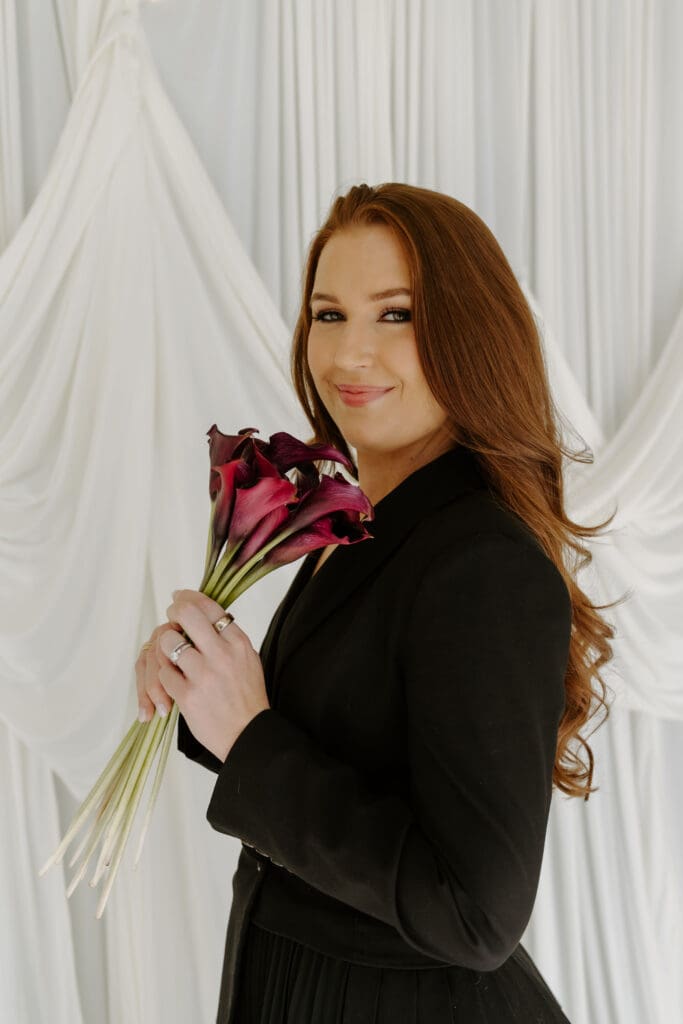
Logan Baker is a Bridal Fashion Stylist and the founder of Love, Logan Wedding Content Creation. With over four years of experience in professional bridal styling, Logan brings a trained, editorial eye to the modern wedding industry. She specializes in helping brides navigate high-fashion trends to find a look that is both intentional and authentic to their personal style.
From the front rows of New York Bridal Fashion Week to behind-the-scenes at the world’s top bridal ateliers, Logan captures the cinematic beauty of the bridal world for both brides and brands. When she isn’t at a runway show or a styling consultation, you can find her sharing the latest industry shifts and “anti-bride” inspiration on social media at @LoveByLogan and @LoganMayoBaker.
Which 2027 trend are you most excited about?
I’m sharing even more behind-the-scenes footage and designer spotlights from New York Bridal Fashion Week over on Instagram and TikTok. Follow along at @LoveByLogan for bridal inspiration and wedding tips!
